How Much Warehouse Space Do You Need? Pallets, Racking and Square Feet
Industrial Insights5 min read
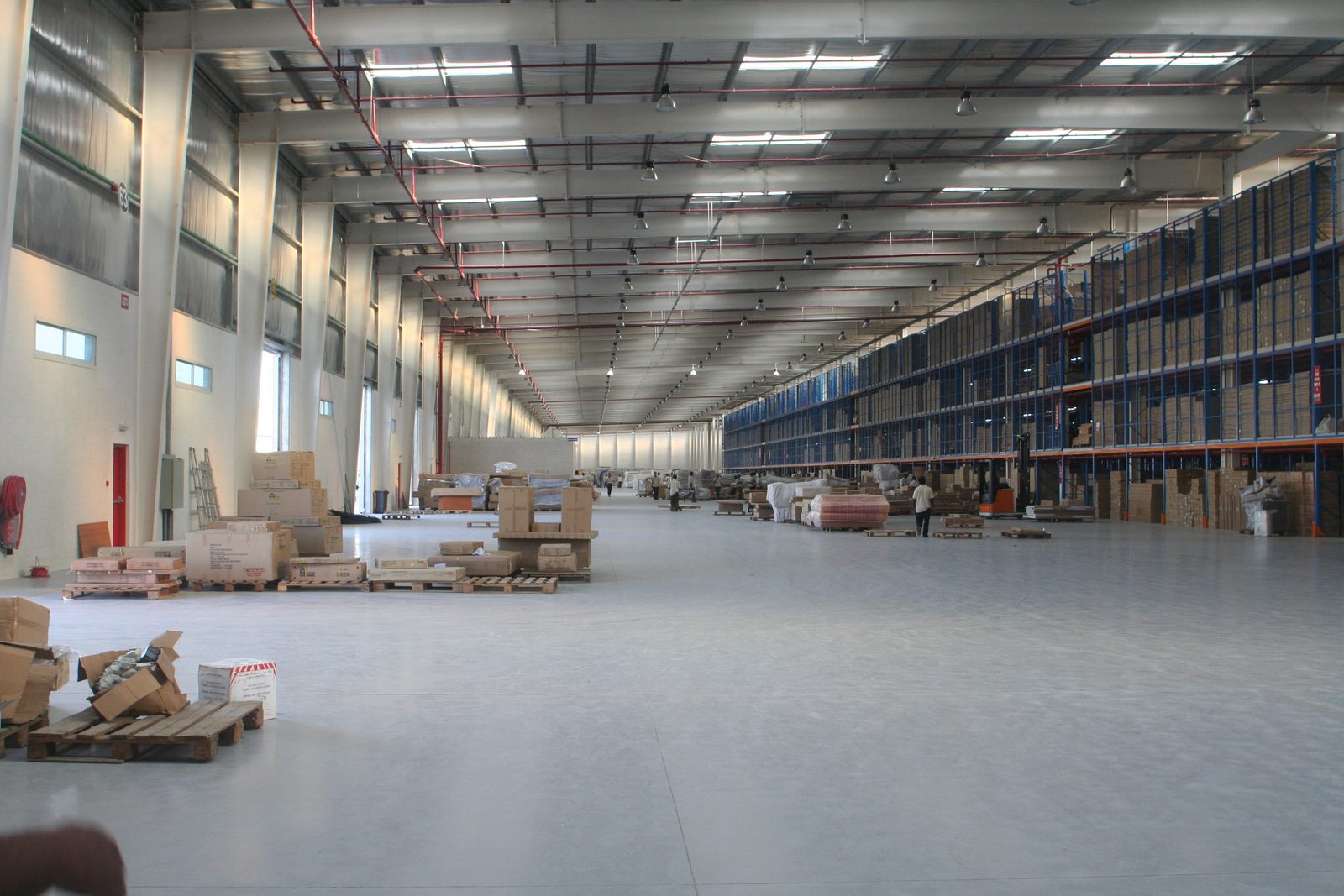
“How big a warehouse do I need?” is the first question on almost every enquiry, and the honest answer is: it depends on how you store. Two businesses with the same stock can need very different areas. This guide shows how to work it out from pallets, aisles and height. The examples use stated assumptions, so you can swap in your own numbers.
Step 1: count pallet positions
Start with how many pallets you need to hold at your busiest time, not on an average day. Include stock that arrives before it leaves, returns, and anything waiting for dispatch. This is your number of pallet positions.
Standard pallets are about 1,200 x 800 mm (the Euro pallet) or 1,200 x 1,000 mm, which is about 47 x 31 inches or 47 x 39 inches. On the floor, one pallet covers roughly 10 to 13 sq ft before any aisle space. That is the smallest area it can take, and real layouts need much more.
Step 2: choose how you will handle pallets
The truck you use sets the aisle width, and the aisle is the biggest part of the floor. Typical working aisle widths are:
- Counterbalance forklift: about 12 feet (roughly 3.7 m)
- Stand-up reach truck: about 8 to 11 feet (roughly 2.4 to 3.4 m), depending on the type
- Narrow-aisle or turret truck: under 5 feet 6 inches (about 1.7 m). It needs special trucks and a flat floor.
These are guides. Check the truck maker’s specification, because the right width depends on the truck and the load.
Step 3: check the clear height
Clear height is the space under the roof structure, lights and sprinklers. More height means more pallet levels on the same floor area, and a smaller warehouse for the same stock. Ask for clear height in every listing. Also check the sprinkler layout and Civil Defence rules, as they limit how close to the ceiling you can store.
Worked example: the method
Our assumptions are simple, and you should replace them with yours:
- Pallets are 1.2 m wide, with 0.15 m between them, so each takes 1.35 m along the rack.
- Racks are double-sided (back to back), 2.2 m deep in total.
- Aisle: 3.7 m for a counterbalance truck, or 2.7 m for a reach truck.
- Each pallet level takes 1.75 m of height (a load about 1.5 m, plus the beam and clearance).
- 0.5 m is kept free below the roof structure and sprinklers.
- The racked area is 70% of the unit. The other 30% is loading, staging, an office and walkways.
- Growth buffer: 20%.
These are planning assumptions for illustration, not rules. Your layout, racking and approvals will change them.
Example A: 300 pallets, a small business
A business with 300 pallet positions, racked four levels high (a ground level plus three above), needs about 75 pallets on the floor. With a counterbalance truck, the racked area is about 3,200 sq ft. Adding the 30% for loading and staging brings it to about 4,200 sq ft, and a 20% growth buffer takes it to about 5,000 sq ft. With a reach truck, the same stock needs about 3,500 sq ft in total, or about 4,200 sq ft with growth.
Example B: 1,000 pallets, and why height matters
With 1,000 positions, four levels and a counterbalance truck, the racked area is about 10,700 sq ft. With the loading area, the unit needs about 13,900 sq ft, or about 16,700 sq ft with growth.
The same 1,000 pallets in a building with 12 m clear height can go six levels high on our assumptions. The total drops to about 9,300 sq ft, or about 11,200 sq ft with growth. A reach truck cuts it further, to roughly 7,700 sq ft. At around 9 m, you get four levels; at 12 m, six. (Our Q4 2026 rent report found 12 m clear height in the Dubai Industrial City units that state it.) The trade-off is cost. Taller racking, reach trucks and a higher-power unit cost more, and a larger unit in a cheaper area can still be the better value. Compare options in our rent prices by area.
Other space you need to add
- Loading area: room for trucks to reverse and for pallets to wait. Check dock doors or ground-level doors, and the yard outside.
- Office and staff facilities
- Returns, quality control and packing benches if you do more than store
- Mezzanine: a floor above that adds usable area. Ask whether it is approved and whether it is counted in the quoted size.
- Open yard: if some goods can stay outside, see our guide to open yards for rent.
Plan for growth, but not too far
A 20% buffer is a sensible start. Renting 50% extra costs rent every month. If your growth is uncertain, choose a landlord who lets you take a second unit nearby, or ask about a break clause. Our guide to renting a warehouse covers lease terms.
Looking for a warehouse in Dubai? Most of our stock never reaches the website – it moves too fast. Tell us the size, power and area you need and we will send matching units with photos and specs, usually the same day.
Frequently asked questions
How many pallets fit in 1,000 sq ft?
On bare floor one pallet covers about 10 to 13 sq ft, but aisles take most of the space. On the assumptions in this guide (counterbalance truck, double-sided racks, 70% of the unit racked), 1,000 sq ft holds roughly 16 pallets per level, or about 65 across four levels. Your layout will differ.
What aisle width do I need for a forklift?
About 12 feet for a counterbalance forklift, about 8 to 11 feet for a reach truck, and under 5.5 feet for a turret truck. Check the maker’s figure for your truck.
How much extra space should I rent for growth?
Many businesses add around 20% to their calculated need. The right figure depends on how fast you are growing and how easily you can add a unit later.
Does clear height change how much space I need?
Yes. More clear height lets you rack more levels, so the same stock needs less floor area. In the example above, 1,000 pallets need about 13,900 sq ft at four levels but about 9,300 sq ft at six levels.
Sources
- Wikipedia – Pallet (EUR 1 and EUR 2 sizes)
- Cisco-Eagle – Key considerations for warehouse rack aisle widths
- Gulf Life Dubai Industrial Rent Report Q4 2026
Header photo: Jabal Ali Industrial 1 Hc-1 by Ryan Lackey, CC BY 2.0, via Wikimedia Commons.